Can You Face Murder Charges After a Fatal DUI Crash in Illinois?
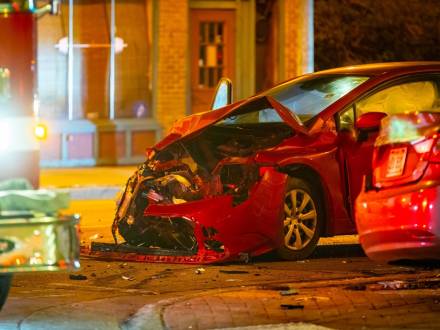
Most fatal DUI crashes in Illinois are charged as aggravated DUI involving death. Reckless homicide can also be charged when prosecutors believe the driver acted recklessly. Murder charges are much less common and usually require far more extreme facts.
If you’ve been charged after a deadly car crash in 2026, our St. Charles, IL reckless homicide defense lawyer can explain which charge applies to your case and what the State must prove.
What Is Aggravated DUI Involving Death in Illinois?
Under 625 ILCS 5/11-501, a DUI becomes aggravated when the DUI violation was a proximate cause of a death. The offense is a Class 2 felony. When one person dies, the sentencing range is three to 14 years. When two or more people die, the range climbs to six to 28 years. A judge can order probation only if extraordinary circumstances justify it. The judge must explain the reasons on the court record.
The State does not have to prove you intended to hurt anyone. It has to prove you committed DUI and that the DUI violation was a proximate cause of the death. The exact evidence required depends on the type of DUI charge involved.
When Can Illinois Charge Murder for a Fatal Crash in Illinois?
A fatal crash in Illinois can lead to first-degree murder charges when the driver knew their actions were highly likely to kill or seriously injure someone. Illinois law calls this a "strong probability" of death or great bodily harm
Prosecutors reserve this for extreme cases. The circumstances that draw it include:
-
Driving the wrong way on a highway at high speed after being warned
-
Fleeing police at extreme speeds through populated areas
-
Deliberately using a vehicle as a weapon
-
Driving with multiple prior DUI convictions in a manner showing conscious disregard for obvious risk
Simply being intoxicated, even severely, does not by itself prove the mental state murder requires. Impairment and knowledge are different things, so prosecutors still must prove that you knew your actions created a strong probability of death or great bodily harm. Choosing to drink or use drugs does not excuse criminal conduct under Illinois law.
First-degree murder carries 20 to 60 years in Illinois, with no probation and strict rules on sentence credit.
What Is Reckless Homicide in Illinois?
Reckless homicide is a separate charge that focuses on reckless driving that causes a death. It applies when a person causes a death by driving recklessly in a way that creates a serious risk of death or great bodily harm. Recklessness in this context means knowing there is a serious risk and choosing to ignore it.
Reckless homicide is generally a Class 3 felony, carrying two to five years, with probation available. Some cases carry higher penalties, including fatal crashes in construction zones or near school crossing guards.
Prosecutors sometimes file reckless homicide alongside aggravated DUI, or offer it as a resolution when the DUI evidence is weaker than the driving evidence.
What Defenses Apply to a Fatal DUI Crash Charge in Illinois?
Possible defenses depend on the facts and the charge. Depending on your case, these defenses can include:
-
Challenging what caused the death: Your lawyer can argue that the DUI violation did not cause the death.
-
Challenging chemical test results: Your lawyer can question how blood was collected, stored, and tested. Mistakes can make the results unreliable or prevent their use in court.
-
Challenging the traffic stop or arrest: Your lawyer can ask the court to exclude evidence obtained through a violation of your constitutional rights.
-
Disputing impairment: If the charge depends on proving you were impaired, your lawyer can challenge the officer’s observations, field sobriety tests, or other evidence.
-
Challenging the murder mental state: For a murder charge, the defense can argue that the evidence does not show you knew your actions created a strong probability of death or great bodily harm.
-
Using accident reconstruction evidence: Vehicle data, road conditions, and the actions of other drivers or pedestrians can help explain how the crash happened.
The strongest defense depends on whether you are facing aggravated DUI, reckless homicide, murder, or multiple charges arising from the same crash.
Schedule a Free Consultation With Our Kane County DUI Defense Attorney
Attorney Stephen M. Komie brings 40 years of experience representing clients in state, federal, and international trials and appeals. When someone dies in a crash, you need an attorney who can examine the charges and evidence right away. That includes what caused the crash and what prosecutors claim you knew about the danger.
Contact Komie and Associates at 312-263-2800 to talk to our St. Charles, IL criminal defense lawyer today.








 Map & Directions


Schedule a Consultation Today
 The use of the Internet or this form for communication with the firm or any individual member of the firm does not establish an attorney-client relationship. Confidential or time-sensitive information should not be sent through this form.
I have read and understand the Disclaimer and Privacy Policy.
From our office in Chicago, Illinois we serve clients throughout the state including but not limited to Joliet, Bridgeview, Wheaton, Rolling Meadows, Lombard, Skokie, Morris, Ottawa, Princeton, Cambridge, Waukegan, LaSalle, Bureau, Peoria, Bloomington, Rockford, Quincy, Macomb, McHenry, Springfield, Rock Island, East St. Louis, Belleville, Elizabethtown, Cook County, Winnebago County, Kane County, Lake County, DuPage County, Jo Daviess County and Northeast Illinois.
Results listed are not a guarantee or indication of future case results.